ARRIVAL OF A MODERN SCI-FI CLASSIC

Related image

It’s tough to make an original film these days and maybe even tougher in the genre of science fiction. The classics are just so iconic and variations on the story about first contact between humans and otherworldly life have included friendly contact, war and something else. Ones where aliens so above us in technology and understanding that we’re just left to ponder and wonder. Once that story is told perfectly what else is there to tell. Think Contact in comparison to 2001: A Space Odyssey or Independence Day in comparison to The Thing or Close Encounters of the Third Kind. Director Denis Villeneuve (he’s so hot right now) and screenwriter Eric Heisserer have not created a new fabric but they have stitched together elements from all these classics and a few new things to make something unique and perhaps most appropriate for our time. This is a sombre film that shows dreary landscapes and sees no excitement in spectacle while effortlessly rendering it. This is a film interested in big ideas but mostly shot with a sense of intimacy often in interiors and with close ups of the actors.

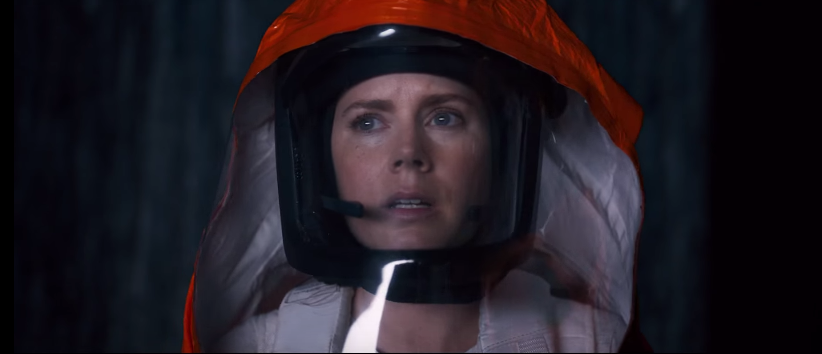
Appropriately it opens with a mother telling her daughter the story of her life and watching her die in hospital of cancer. It is intimate and it is moving, nothing quite tugs at the heart strings like parent caring for a dying child and the audience’s shared sadness hints at one aspect of our common humanity. The mother is linguist Louise Banks (Amy Adams) in a performance that hopefully along with American Hustle sets Adams up for the second part of her career. She’s played vixens and she’s played cute but here she plays strong, maternal and intelligent and perhaps most key – mature.aliens scifi spaceship arrivalAliens appear in massive shell-like vessels that hover around the planet in 12 locations. The US Military arrives in the form of Colonel Weber (Forest Whitaker) at Banks’s university and recruit her to help them at a site in America. She is to work alongside theoretical physicist Ian Donnelly played by Jeremy Renner who has a more playful personality than everybody else he seems to be working with. At the site they are introduced to Michael Stuhlbarg’s Agent David Halpern who it is suspected works for the CIA and is more cautious as to what is the potential harm that could be rendered by the arrival of the alien vessels.

To reveal more of the plot would be sacrilege, although most promotional materials have already revealed you will see the aliens it is important to note that the film takes it time in introducing them wanting to present the scope and magnificence of their presence but also the mundane and banal conditions of the base that is set up near the vessel in America to investigate it. Image result for arrival filmI for one wondered why the U.S. would place so many personnel near the vessel at the bottom of flat valley rather than helicopter people in from further away on higher ground but maybe they figured the aliens have already proven an ability to travel fast enough to sneak up on them anyway so why not save a few bucks on petrol. It feels right and real that contacts with aliens would be set up in a tent city with dimly lit rooms and the lime green shading of a hospital full of tired middle aged bureaucrats questioning each other’s ideas on a regular basis. The aliens themselves are always seen with a sense of wonder (their design is original and interesting too), how to get to them starts off in a simple fashion but is suitable otherworldly and unnerving.

Image result for arrival film

As the film progresses the emotional arc of Louise dealing with her daughter’s death and the mystery of the aliens start to develop and the stakes get higher. Villeneuve has crafted a classic sci-fi tale here that deals with big ideas but goes back to questioning what is humanity and where are we headed in the distant future. There are twists that do not cheat, that have groundwork lay for them before hand and that are very satisfying but one development in the third act does not feel so profound and you may be left with more questions than satisfactory answers concerning one male character.

Yet something unique and emotional has been crafted here that will stand the test of time. Close Encounters of the Third Time may remain the best example of the genre of first contact with alien life. Steven Spielberg always laments though that of all his films it is the one that ages him. The lead character is a father who leaves his family to be with the aliens. Spielberg made the film as a young man and since becoming a father he has learnt no parent would ever give up being with their child – no matter what. Arrival is a film made by people who know this to be true.

-Lloyd Marken

Image result for arrival film

DOCTOR STRANGE STRANGELY FAMILIAR YET NEW

Related image

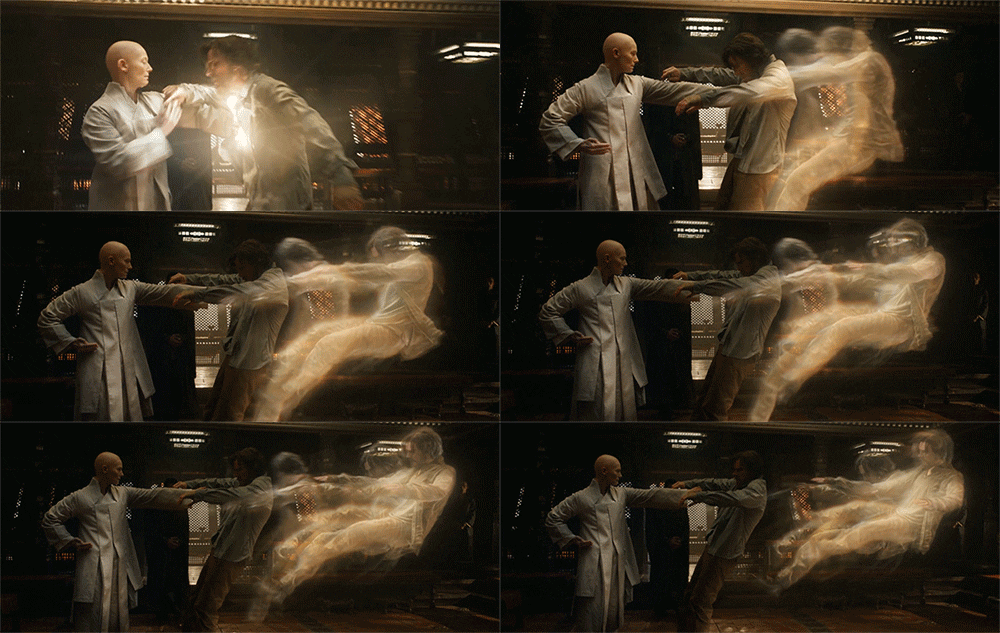
Doctor Strange does a lot of new interesting things on film, stitched together by many influences of before. Fights between souls, palavers with galactic beings, and foot chases along New York skyscrapers may remind modern audiences of The Matrix, Inception and various comic books but never before has it been seen on such a scale and never before with the witty and ass-kicking Cloak of Levitation. The Marvel Cinematic Universe is expanding possibilities for future adventures and even daring to switch up how their third act climaxes play out.

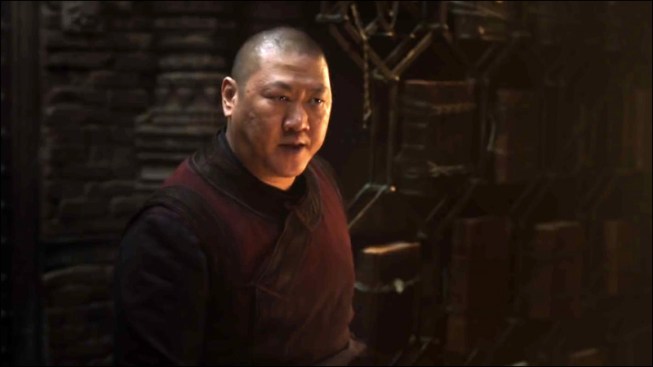
So it’s a little sad to report that Stephen Strange follows the path of Tony Stark a little bit. Stark was of course an arrogant tech genius lay low by a life threatening experience and imprisonment. While wounded his gifts and expertise remained unharmed even if his purpose in life was changed. Stephen Strange is arrogant as an incredibly gifted and brilliant neurosurgeon that has a car accident. It’s a key difference that Stephen’s gifts are taken from him and his arrogance takes a lot longer to be stripped away. Casual fans though may find too much familiar in this comic book origin story. The film becoming more interesting as he leaves behind love interest Dr Christine Palmer and sets forth for Nepal to find Kamar-Tag and learn how to heal himself from the teachings of the sorcerer The Ancient One ( Tilda Swinton). doctor strangeStrange proves a quick study (maybe a little too quick his first showdown with powerful sorcerers sees him handle himself very well for a rookie) getting help from Karl Mordor (Chiwetel Ejiofor) and Wong who is the keeper of Ancient Texts and gets most of the film’s best bits (Benedict Wong). Related imageThrough them Dr. Strange becomes a healed man immersed with a new identity and purpose when a disenchanted former follower Kaecilius (Mads Mikkelsen) starts an all-out war against the Ancient One and those that stand with her.
The action scenes and effects are first rate not just for their look but also for how fresh they feel. Marvel films recently have been criticised for all retaining an aircraft hangar/industrial park aesthetic and director Scott Derrickson may go some way to challenging this with old fashioned dressed up studio sets but also real location shooting in Kathmandu, London, New York and Hong Kong on the streets that look characteristic of those cities in particular. The cast which includes Rachel McAdams and Michael Stuhlbarg sometimes feel wasted here but the dynamic between Strange, Mordor, Wong and the Ancient One is strong. Mikkelsen may not get too much either neither being particularly threatening nor scenery chewing but he still gets a few chuckles and does his fight scenes well. The film is alive with the possibilities that this character and his realm of influence opens up. As the second half rolls on, Strange takes up his new mantle a bit too easily and set piece after set piece follow each other without any real further character development but the finale flips Hollywood conventions and revels in the tricks that Strange can pull off. There is a lot here to enjoy and with a little bit of luck it won’t be long before we see Dr Strange again.

-Lloyd Marken

marvel doctor strange

STEVE JOBS GETS THE SORKIN TREATMENT

Steve Jobs is a good movie; let’s get out of the way right now. Written by Aaron Sorkin, directed by Danny Boyle and starring-wait for it-Michael Fassbender, Kate Winslet, Jeff Daniels, Seth Rogen, Katherine Waterston, Michael Stuhlbarg and Sarah Snook. A biopic about a high profile personality that changed the way we live, it followed a familiar path for awards season hopefuls. Launched first at Telluride Film Festival, and then given a limited release where it scored the highest per screen average gross of 2015 before opening wide to have it on everybody’s mind when award nominations were considered. Sadly the film did not open with big numbers in America and was pulled from wide release after only two weeks before limping through foreign territories. Kate Winslet and Aaron Sorkin did pick up Golden Globes for their efforts and the film did receive two Oscar nominations but compared to the similar The Social Network, Steve Jobs was seen as a failure. This is a shame because it boasts the same kind of quality we’ve come to expect from all involved.

Steve Jobs is not really supposed to be about the man we all know; sure it takes facets of that myth that we know all and sprinkles them throughout. It’s widely reported that he may not have been a very nice man, at least not in the beginning of his career and the film asks an age old question. Can only great things be done by people who are so driven they cannot sustain any sincere and worthy relationships. The film is structured around three acts like a play with each act taking place behind the scenes leading up to a presentation to launch a new product. I could tell you what they are but it doesn’t really matter. The film is about a father and a daughter, there’s a lot of noise about, various work colleagues and what their relationship was to Jobs, how they changed him and were changed by him, whether they pushed him into failures or better decisions. None of it is as important as the relationship between parents and children.

Mackenzie Moss plays Lisa in 1984 when Jobs wants to put a personal computer in every home and change the world. He’s young, ambitious and furious that ex-girlfriend Chrisann Brennan (Katherine Waterston) is claiming her child is his. Seth Rogen is Apple co-founder Steve Wozniak who is trusted and cared for by Jobs seen as someone very tech-minded but not necessarily as strong willed as Jobs. Apple CEO John Sculley appears at the launch to offer advice and show his support, they have a warm relationship. Backstage Andy Hertzfeld (Michael Stuhlbarg) is being pressured to fix glitches or face consequences as an original Mac team member. Some people are treated well by the icon, others stand up to him, and others seem to know how to deal with him. Only one is truly able to communicate with him and that is marketing executive Joanna Hoffman played by Kate Winslet.

In every subsequent act the relationships Jobs has with these people changes, arguably one for the better, but the relationship with Hoffman never changes. She is his confidant, his moral compass and while her patience wears thin as the years pass by she never leaves his side or stops being close to him. If half of what this film says is true Joanna Hoffman would be a fascinating person to meet and talk to. Jobs remains an enigma played as a real man by Michael Fassbender with volatile emotions but always able to keep something to himself. We see him angry, his pride hurt, his mind frantic for a way to win, smug in victory. The intelligence and energy of the man are on display but tellingly there may only be one genuine significant smile throughout the film. Talk about driven but for true thoughts and feelings maybe only Joanna knows. Kate Winslet plays her as firm when she needs to be but gentle as well, she appeals to his good side in a way most people wouldn’t dare.

Ripley Sobo as Lisa in 1988 and Perla Haney-Jardine as Lisa in 1998 effectively convey a child struggling to be acknowledged by their parent in some way and the anger and confusion that will result from that. Their story is the one building to a climax, not Jobs triumphant return to Apple. Rogen has an opportunity here to sprout Sorkin dialogue and be in a different type of movie and acquits himself well. Possibly now as celebrated and recognised for his contributions as Steve Jobs, you don’t ever hear too many stories about Steve Wozniak being an unpleasant person to work with and there is something in that given quiet dignity in Rogen’s performance. Jeff Daniels who got to play leading man on Sorkin’s The News Room here is an unwilling antagonist as John Sculley. The Sorkin scripted showdown between Sculley and Jobs are riveting but far more important are there scenes in 1998.

I still can’t shake that for all the talking that goes on in a Sorkin screenplay, Fassbender’s main achievement is to convey so much of Job’s growth in subtleties. One of the greatest actors working today, Fassbender is so consistent we may start taking for granted how good he is. Sorkin writes clever dialogue for smart characters but always with an emotional through line, this is another tour de force by him.

After David Fincher’s collaboration with Sorkin yielded The Social Network, Danny Boyle being attached to this movie sounded like an exciting prospect and Boyle doesn’t disappoint. Lacking most of his more energetic flourishes from other films there has still been distinctive technical chances that make the film look and sound interesting and reflect the growth of the technology and the characters in the story. Cinematographer Alwin Kuchler shoots in 16mm for the 1984 scenes, 35mm for 1988 and digital in 1998. At the same time score composer Daniel Pemberton used analogue synthesizers for the 1984 scenes, a more orchestral score for 1988 and digitally produced music for 1998. These are all great touches that you stop noticing after a while but help create mood and reflect the changing of time and characters. Similar choices were made in terms of production design and where each launch would be set. This is high end filmmaking that can’t be faulted, not only does it look great but it serves a purpose. For example notice where late important conversations occur in and with whom in each act. Act I a walk around outside from one building to the other. Act II down in the bowels of a theatre in a dark hallway. Act III in a high up in a rooftop carpark out in the open again.

There were better films that came out during Oscar season like Spotlight. Something is off here, maybe Jobs himself remains too aloof or maybe we can’t care too much about rich business people being mean to each other. Maybe the people involved have delivered for us too much that we now expect more. If you haven’t seen it, give it a chance the film effectively and movingly tells a story about a father and daughter reconciling and maybe a man who finally figured out what was truly important.

-Lloyd Marken